


Picture this:
You’ve just used up the last drop of your moisturizer. One that you bought based on a friend’s referral. Survey says it was pretty good. Really good, even.
But now that it’s run out and you’re due to for a restock, you can’t help but wonder…
“What if there’s one that could do even more of what I need?”
So you decide to run some “super quick” searches (famous last words).
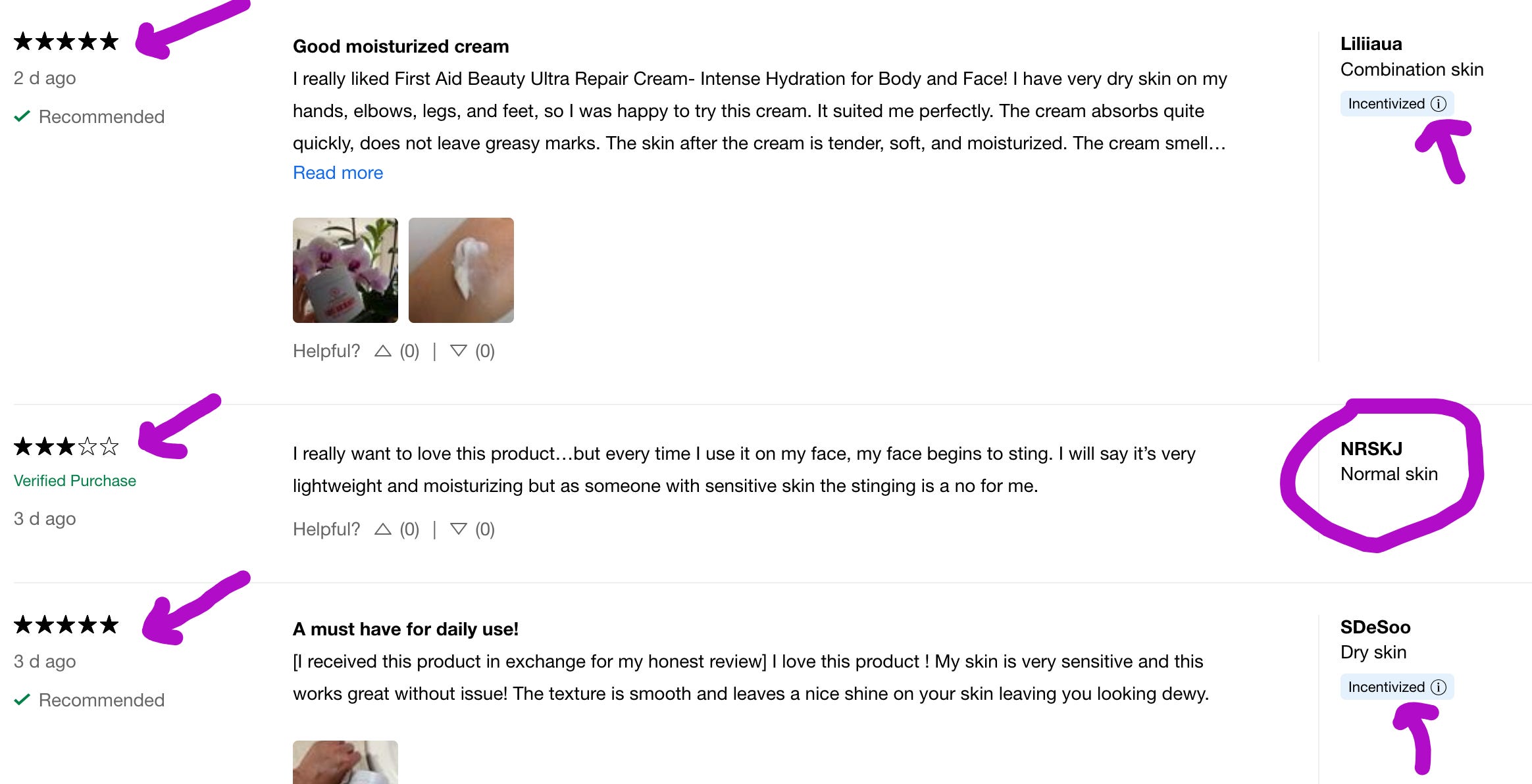
It might start on a retail website, where moisturizer reviews are glowing, of course. Five stars across the board, no questions asked (ahem, paging Sephora and its incentivized slop…)
But it still feels off.
So you bounce to Google and type “best moisturizer for dry skin reddit” you notice a trend. Some of the same brands keep popping up. Is this fake?

You know what, no. Maybe now a quick search on TikTok for due diligence’s sake.
You open up TikTok and find one person who says one moisturizer gave them breakouts, another who proclaims this brand has changed their life (with, surprise! a TikTok Shop link) as well as an AI-generated flurry at the top with takeaways.
Within a half hour, you’re mentally drained - because you’ve just Nancy Drewed yourself into doing what feels like fuck all online.
So the next day, committed to not wasting any more time, you surrender and end up shopping an “old faithful” moisturizer you know and trust. A simple one click to buy, lumped in with an order of other essentials. Call it a wash.
Welcome to the current state of needing something online.
Even though the brand and platform who get your money don’t always offer the “best” product, you buy it because it’s the one requiring the least amount of thought.
This moment of digital white flag surrender is the most valuable real estate on the internet right now, so it’s no wonder every platform is trying to become the one place where it happens.
Trust? She’s dead
Go to any Sephora.com product review section and you’ll notice most are marked as “incentivized”, meaning the brand or a third party service like Influenster paid for people to “honestly” review these products (meaning most write glowing reviews to receive more products).
These manufactured product reviews have become so blatant now that reviewers aren’t even toggling on “incentivized”, instead including little text disclaimers at the end of their review so your eyes scan past it.
Add onto that the astroturfing that’s happening across Reddit, one of the most popularly cited and searched for sources among search engines, AI or otherwise.
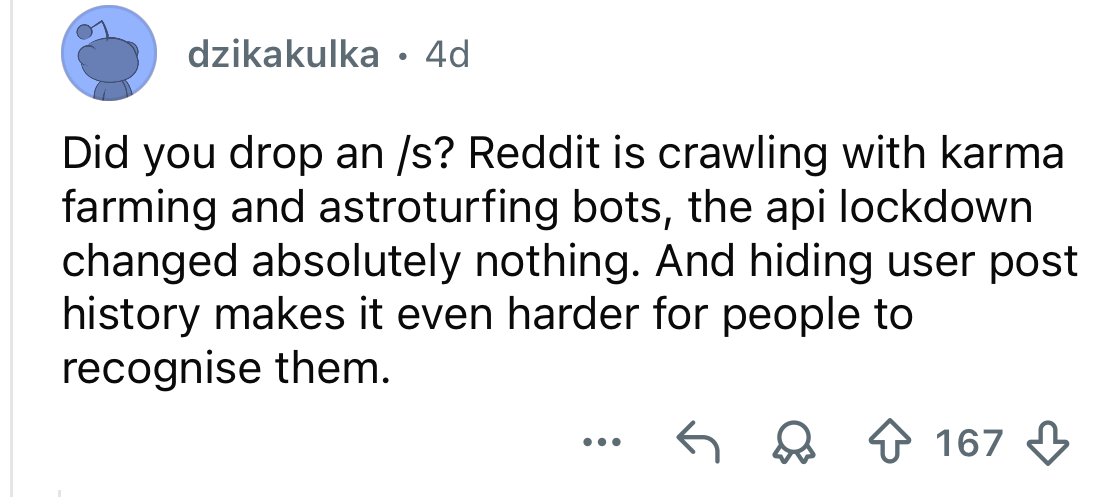
A brand can infiltrate a subreddit at any time, and game “best” reviews to earn inauthentic rankings now. Keep in mind AI scans data points without going deeper to understand sentiment, sarcasm, what’s fake, and what’s real. That’s still our job, you know, the peasant class.
I know I sound salty, but the research backs all of this up. Capterra surveyed over 5,000 people from 12 countries and found that 84% of respondents encounter difficulties with online search filters, and more than half are frustrated by the volume of sponsored, inaccurate, and irrelevant results.
Accenture’s 2024 consumer research found that 74% of shoppers walked away from purchases because they felt overwhelmed by content, too many choices, and the effort required to decide.
And in 2020, which keep in mind was not that long ago, 79% of consumers trusted online reviews as much as personal recommendations. By 2025, that number dropped to 42%.
So who’s going to swoop in and fix this?
Well, right now…nobody. Because confusion writes the checks.
This advertising is insanely profitable for platforms. According to IAB, US digital revenue hit $294.6 billion in 2025. Meta and Google alone capture more than half of all global digital ad spend.
More confused shoppers means longer sessions means more ad impressions and ultimately more money.
Could AI come in and help make sense of this chaos? No (derogatory) Peer-reviewed research from 2023 confirmed that AI supported recommendations can recreate choice overload instead of fixing. AI has made SO many promises, including the idea that it can help you make decisions faster. But instead, it’s adding even more cognitive slop to your decision-making.
Sadly, the regulating bodies in our government aren’t going to step in to do much either, at least not in a meaningful amount of time. The FTC finalized a Consumer Review Rule in 2024 and it took them 14 - let me repeat, 14 - months to take any action. Warning letters were sent to 10 unnamed companies, and then they wiped their hands clean.
In 2025, the current administration proposed cutting the FTC’s antitrust budget by 11%, and redirected the agency’s priorities away from consumer protection in commerce.
The only group with real power here are the real regulators, and I don’t meant the FTC. I mean the advertisers. The ones with the money bags.
When DoubleVerify launched a tool to give brands the ability to pull ad spend from AI-generated slop, YouTube’s CEO named AI slop as a priority in his 2026 letter within months.
Platforms won’t usually self-correct for users (unless those users band together to collectively take action) but they’ll absolutely self-correct for revenue.
The race to become one place
So if no one is running to fix this broken trust problem, then what’s going to happen?
As we know, shareholders expect real growth each quarter. Most major platform players rely on ad revenue to succeed, but they also constantly reshape their platforms to maximize ad space - which of course, then compromises the user experience. So they diversify.
User subscriptions have become a bigger test as of late. Just look at YouTube Premium, Google Gemini, Meta’s Instagram Plus. As I’ve said before, users are no longer just the product. They’re also paying for the product. Why not both!
But subscriptions just bide time until these platforms can unlock the next big growth lever: commerce.
In a shitshow of fragmented user behaviors, every single platform, brand, and AI search engine is speedrunning to figure out how to own the one place where you give up.
And the one platform that should be top of mind for everyone right now is TikTok, regardless of the shuffling that happened here in the US in January.
eMarketer projects TikTok Shop will generate over $23 billion in US sales this year, which is more than Macy’s entire business. Not to mention this is from a commerce layer that launched in 2023. That’s INSANITY.
TikTok Shop pulls this off mostly because the checkout lives inside the scroll. If you see a product in a video, you could impulse buy it before you’ve thought hard enough to question it. And even though TikTok Shop’s label signals commission the same way a Sephora incentivized review does, the purchase happens anyway because the friction is near zero.
As expected, this makes Mark and Meta have perpetual platform envy. So they’re aggressively building the next era of Instagram to compete. Since the Metaverse didn’t pan out, they’re pivoted to product tags in Reels and Stories, AR tools with Meta Ray-Ban glasses aimed to reduce purchase hesitation, and AI shopping agents for Instagram coming later this year.
Amazon went the other direction. They tried discovery with their TikTok-style shopping feed, and killed it after it flopped. Now they’ve moved onto Rufus, now Alexa for Shopping, an AI shopping assistant, while doubling down on what’s already worked for them: being the one place you default to when everything else has frustrated you.
And then, of course, there’s OpenAI, who hired Meta’s former VP of global clients and agencies in March to build out ChatGPT’s ad business so that users can skip the search entirely and get recommendations, albeit some paid for, instead of ten blue links.
It’s all becoming a blur of platforms itching to get a piece of you. And as user subscriptions and ads fail to satisfy the hungry shareholders, commerce will be the pivot, as it’s one of the only avenues left to try and scale.
What this means for you and I
Full transparency: while I spent years in the corporate world working for not-so-great big brands, I’ve spent the majority of my time outside of corporate committed to working helping small brands and founders get a leg up.
I know there are marketers and people in the industry who follow me or read this, who share the sentiment that brands and platforms have taken advantage of their relationship with customers.
So when I say “you”, I mean a collective us, people who want to see things change for the better. More competition. More genuine problem solving for people. Less exploitation and monopolies.
With that said, if you’re a brand, you’re operating inside a system where the platform’s incentives and your customer’s experience are essentially structurally opposed. Platforms need confusion, but your customer doesn’t, and you’re paying for the ad, or even making the content, that runs in the middle.
So if trust starts to break down at every level, then your brand becomes the trust. When people can’t trust the platforms, the reviews, or even the creator with a Shop link, the only thing left is what they already know and believe about you. And it’s much harder to picture this when “you” is a massive, publicly operated team actively enshittifying the products you sell. It’s much easier when there are faces to the brand, and real thought and consideration going toward the customer.
There’s a term for what happens with customers called passive loyalty, meaning there’s no real affinity for brands, just the path of least resistance. It’s the same feeling we get when we’re not excited about elected politicians and have to vote for the lesser evil of the two.
People repurchase out of inertia because the effort to start the research spiral again isn’t worth it. But could you even really call that loyalty? It looks and feels more like exhaustion as your brand just happens to be top of mind in that moment, or you just bought the sponsored spot for that day. It’s fleeting.
Brands who have spent the last decade going all-in on performance marketing at the expense of brand building and brand marketing are the most exposed right now. They optimized for performance with guardrails created by platforms to get flyby attention yet elicit unenthusiastic purchase decisions. Once again, lesser of two evils.
And now we’re going to see the middle start to bottom out, as we are with many other industries.
So I foresee two paths here if you’re a brand:
Path #1: Ubiquity. You make a choice to show up where every possible breakdown happens, i.e. every LLM, every platform, anything where a purchase decision is being made or abandoned. You’re almost like…three steps ahead, so that if someone stops looking, you’re there. Yes, this is insanely expensive and extremely tiresome. And it would only work at scale. But knowing what we know about consumer behavior up until this point, it would work. At least for a little.
Path #2: Exclusivity. You decide to disappear on purpose and build a direct relationship so strong that the customer never enters the exhaustion cycle because they love YOU.
One recent example of this that comes to mind is a creator who posted about getting invited to a brand event only to be surrounded by dancers. Rosie was the only one invited to the activation from what I know, and was so caught off guard that she made a video about it, which got over 4 million impressions.
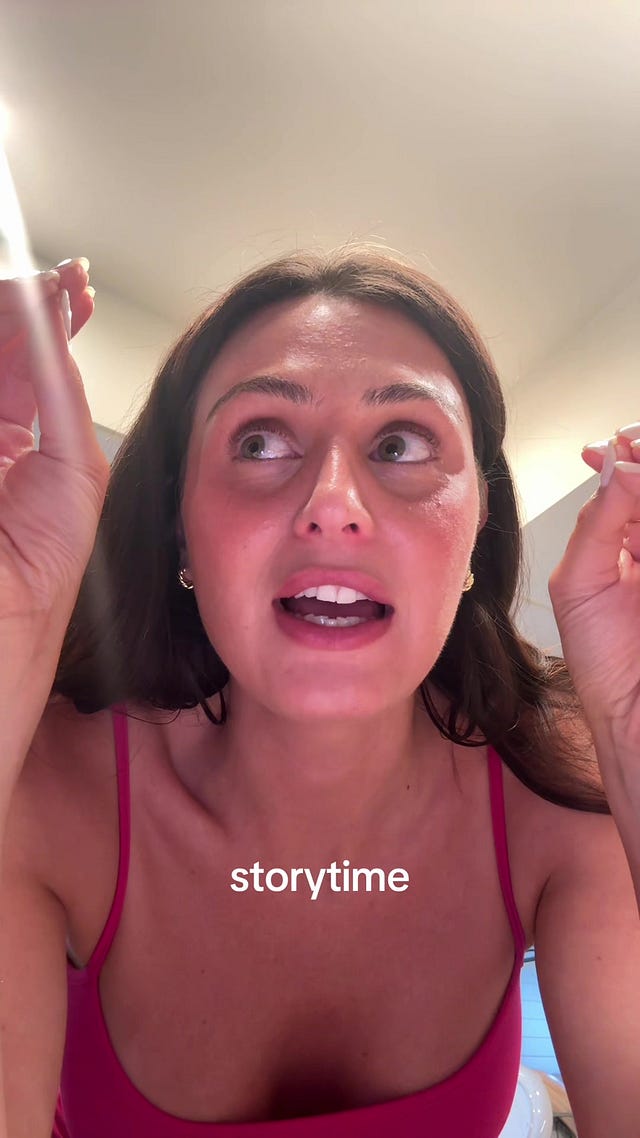
 Tiktok failed to load.
Enable 3rd party cookies or use another browser
A one person activation that’s received millions of organic impressions. What’s more, it sounds like the creator has formed a genuine relationship with the people behind the brand.
Beyond one-person activations we see this REAL communities, subscriptions, and owned channels, i.e. giving a reason to come back that doesn’t depend on an algorithm surfacing, or resurfacing, you.
What’s going away is what falls in between ubiquity and exclusivity. The “known but not well known” brand with semi-decent distribution and moderate spend but no owned relationship. They can coast, maybe for a little, but it’ll come at a cost.
At the end of the day, the purchases being made right now either build the zero-click or one-click way to be seen because they’re the closest to someone not caring, OR they’re the ones who decide that the entire journey is irrelevant in the first place.
But when everyone is running toward becoming the one place, brands and marketers on the periphery have some choices to make.
You know I feel this in my bones and am working every day to build something better. Connecting consumers with cool brands making good shit should be enough. I don’t know why they have to squeeze us for every last penny and make everything miserable. 😞
Great piece. Couldn’t agree more. As a consumer I feel tired all the time. Just recently wanted to buy myself a new blush but the amount of research and content I’d have to sift through felt too much so I just bought the same thing again. As a marketer, don’t understand where my focus should lie, optimising everything for AI or spending more time on brand building, story telling, or people focused initiatives.